
Lamar County Criminal History Checks
Begin by deciding which Lamar County record will answer the question. Current custody belongs to the detention center. An incident narrative belongs to the arresting agency. The Superior Court clerk keeps a filed felony case and its disposition. Magistrate Court handles arrest and search warrants plus early proceedings. The Georgia Bureau of Investigation, through the Georgia Crime Information Center, maintains the compiled state history, while the Georgia Department of Corrections covers state custody and supervision.
Names alone are weak identifiers. Gather a full name, date of birth when lawfully available, the incident or case number, approximate date, and the agency involved. Then follow a channel-complete sequence:
- Ask the Lamar County sheriff or jail about a local report, booking, or current inmate.
- Contact the proper court for the filed charge and docket.
- Request the disposition and sentence from the clerk.
- Use GCIC procedures for a compiled Georgia history or correction.
- Check GDC only after state transfer or for state supervision.
Three Lamar County Record Counters
Lamar County's justice offices are close in miles but distinct in law. The Clerk of Superior and Juvenile Court at 326 Thomaston Street holds formal felony and juvenile files. The sheriff, detention center, records staff, and Magistrate Court operate at 121 Roberta Drive, but each unit still has its own records. The county open-records officer at 790 Veterans Parkway handles ordinary Board of Commissioners material, not sheriff or probate records.
Superior Court Clerk
326 Thomaston Street
Barnesville, GA 30204
770-358-5145
Monday-Friday, 8:00 a.m.-5:00 p.m.
Sheriff Records
121 Roberta Drive
Barnesville, GA 30204
770-358-5377
Counter help: 8:00 a.m.-4:30 p.m.
Magistrate Court
121 Roberta Drive
Barnesville, GA 30204
770-358-5154
Call for warrant and early-case questions.
A correct referral can sound like a rejection. If one counter says it has no record, ask which custodian would receive that type of filing instead of assuming the event never existed.
Official Background Checks in Georgia
The Georgia Crime Information Center maintains the Computerized Criminal History database, but Georgia does not offer an unrestricted public name-search portal for a complete state history. Lamar County Sheriff's Office provides an in-person Georgia history service. The person appears with photo identification, signs the required consent, and pays the sheriff's stated $20 fee. Without written consent, dissemination is limited by Georgia law, including the rules for felony conviction information.
Fingerprint-based checks use the Georgia Applicant Processing Service, or GAPS, under the current GBI vendor workflow. Purpose codes, registration, locations, and current charges should be confirmed in the live system. A person reviewing their own record may also follow the appointment process described in the GBI criminal-history FAQ. The local name check and a fingerprint-supported state or federal review are different products.
Lamar Sheriff Records Without a Portal
Incident reports are not posted online. The sheriff's Administrative Division accepts requests in person, by email at general@lamarcountysheriff.com, by fax at 770-358-5195, and by mail. The form can request an incident report, 911 audio, inmate information sheet, CAD report, or another specified item. It asks for the case number, incident date and time, location, and involved names, which gives staff better search keys than a broad name-only request.
Allow at least three business days after filing before seeking an incident report. The PDF lists 8:30 a.m.-4:00 p.m. for in-person submission, while the records page gives broader assistance hours of 8:00 a.m.-4:30 p.m. The narrower window is the safer plan. A mailed report request uses a $3 cashier's check or money order, the case number, requester name, and a self-addressed stamped envelope. Accident reports follow the sheriff-designated BuyCrash channel.
Kinds of Criminal Records
Lamar County criminal records form a chain rather than one file. The arresting agency writes the incident narrative. Jail staff create a booking entry and, for a fingerprintable event, transmit an arrest cycle to GCIC. A prosecutor may later file a different charge. The court docket then records hearings, pleas, motions, disposition, and sentence. GDC creates another record if the person enters state custody.
- Incident and arrest reports: describe the responding agency's investigation.
- Booking records: show intake, initial charge, custody, and release facts.
- Court files: contain the accusation or indictment, docket, orders, and result.
- Compiled histories: join reported Georgia arrest cycles with dispositions.
- Supervision and registry entries: are maintained through their own state and local systems.
For focused detail, use the Lamar County Arrest Search, Court Case Lookup, or Sex Offender Lookup. Each follows the custodian for that record type.
Lamar Booking Data Changes Hands
The Lamar County Detention Center receives people arrested by the sheriff and by other agencies. That makes the jail a useful source for custody, but not always for the full incident narrative. The initial booking charge may change when the prosecutor reviews the evidence. Release from jail does not mean dismissal, and a later court dismissal does not prove that GCIC has already received the final disposition.
Record flow: Incident report › booking and fingerprints › GCIC arrest cycle › prosecutor filing › court disposition › GCIC update.
When the pieces conflict, obtain a certified disposition from the Lamar clerk. Compare the case number, charge, and final order with the state history. Then use the arresting agency and GCIC correction procedure to address a missing or wrong disposition. This method preserves the distinction between what happened at intake and what the court ultimately decided.
Lamar County Criminal Records: What They Contain
Fields vary by custodian. A Lamar County booking sheet focuses on intake and custody. A court file focuses on filed allegations and judicial action. A GCIC history joins identifiers with reported arrest and disposition cycles. Read the source label before treating a field as final.
| Name & Identifiers | Legal name, aliases, birth details, and agency identifiers when lawfully disclosed. |
|---|---|
| Arrest / Booking Data | Arresting agency, booking date, initial charge, bond, and custody status. |
| Charges & Statutes | Booking allegations or later filed counts with Georgia code citations. |
| Disposition | Conviction, dismissal, acquittal, nolle prosequi, or another final result. |
| Sentence | Custody, probation, fines, conditions, and credit ordered by the court. |
| Custody / Supervision | County jail, GDC placement, release, probation, or parole status when published. |
A “nolle prosequi” means the prosecutor chose not to pursue that count at that time. It is not the same as an acquittal after trial. A disposition is the court's result, while a docket is the dated list of filings and events.
From Lamar Jail to GDC
The detention center, built in 1992 with 152 beds, manages intake, booking, housing, food, medical supervision, and release. Jail operations may confirm current county custody by phone at 770-358-5151, or records staff may provide an inmate information sheet through the sheriff form. A person who has left the county jail after a state sentence may no longer appear in that local channel.
The GDC Find an Offender gateway becomes relevant after state transfer. The official GDC search page is shown below.
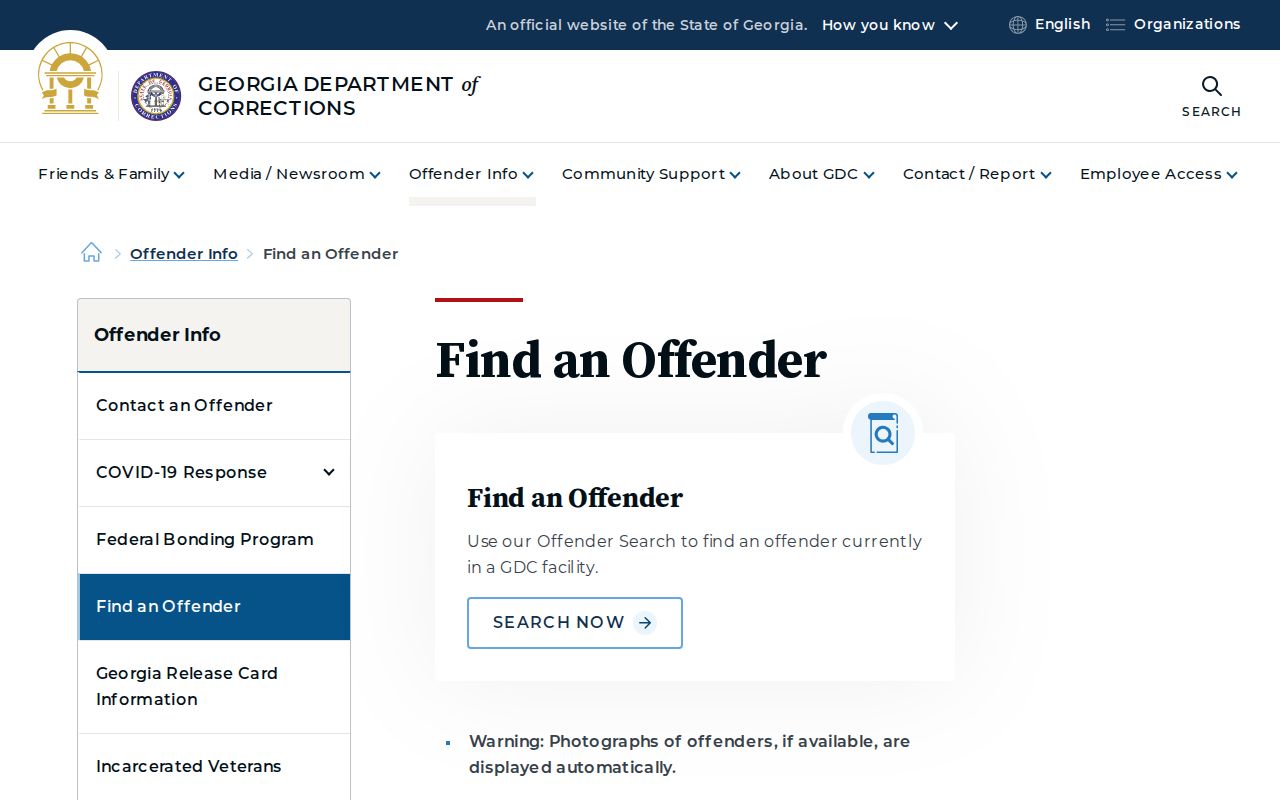
GDC results may show an agency number, offense, facility, release date, and tentative parole month, but they are not a complete Lamar County pretrial jail roster.
| Search control | Best use |
|---|---|
| Name | Try the first four surname letters when an exact spelling fails. |
| GDC ID | Use a known state identifier for a tighter match. |
| Case number | Connect a state record to a known court matter. |
| Active or all | Select all when the person is no longer active. |
Georgia Public Access Laws
The Georgia Open Records Act generally requires a timely response from an agency that holds a public record. Within three business days, the agency ordinarily produces responsive material, provides a timetable and cost, or cites the legal basis for withholding it. The law does not turn every criminal-history field into an open record. Active investigative files, juvenile material, protected victim information, security data, and statutory identifiers may be withheld or redacted.
Key Georgia rules:
O.C.G.A. §50-18-71 governs inspection, copies, response procedures, and eligible costs.
O.C.G.A. §35-3-35 controls dissemination of Georgia criminal-history information.
O.C.G.A. §35-3-37 provides correction and record-restriction procedures.
Georgia juvenile law limits access to protected juvenile records.
Ask for segregable, nonexempt parts when only part of a Lamar County record is protected. A denial should identify the authority used. The Georgia Attorney General's open-government resources provide further state guidance.
Lamar Record Costs Depend on Route
No single price covers all Lamar County criminal records. Fees attach to a particular service and custodian. Confirm any current court certification charge directly with the clerk rather than extending the sheriff's price to court documents.
| Service | Documented amount | Limits |
|---|---|---|
| Sheriff Georgia history | $20 | In person, photo ID and signed consent. |
| Mailed sheriff report | $3 | Cashier's check or money order plus case details and return envelope. |
| Ordinary county copies | $0.10 per page | Open Records Act notice; eligible labor may apply after 15 minutes. |
| Sheriff taking criminal bond | $13 | A bond-process fee, not a records fee. |
The county officer at Veterans Parkway does not process sheriff records. Send law-enforcement requests to the sheriff and probate requests to the probate custodian. Choosing the right recipient prevents delay and avoids duplicate searches.
Restricted, Sealed & Expunged Records
Georgia's operative term is “record restriction.” Under O.C.G.A. §35-3-37, a qualifying arrest cycle may be limited from noncriminal-justice dissemination. That is not a promise that every courthouse paper, incident report, booking entry, or news item vanishes. Court sealing is a related but separate step available in defined circumstances. First Offender treatment and a pardon also have distinct rules and effects.
For self-review, first get the complete history through an authorized route. If a Lamar County arrest appears without its final result, obtain a certified disposition from the clerk. Follow the prosecutor, arresting-agency, and GCIC correction or restriction path that fits the event. Juvenile files have separate access rules and should not be treated like adult court records.
A restricted GCIC entry may still have a source record at another custodian. Confirm the scope of each order before assuming a record is unavailable everywhere.
Lamar Warrants Follow the Issuing Court
Magistrate Court issues arrest and search warrants and handles early warrant functions. A bench warrant may arise later from a missed court date, so the issuing court matters. Lamar County has no documented public web search that can safely clear every warrant question. A missing online result is not proof that no warrant exists.
For a possible warrant involving yourself, contact the court, counsel, and the sheriff through controlled official channels. Use the case or citation number where possible. The clerk can trace a filed Superior Court matter, while Magistrate Court can address its warrant process at 770-358-5154. Do not rely on an unofficial people-search site or take steps that could create risk at a courthouse or traffic stop.
Note: Warrant status can change quickly, and only the issuing court or responsible law-enforcement office can verify current status.
Georgia Gateways Need Lamar Verification
The Lamar clerk points users toward the Georgia Superior Court Clerks' Cooperative Authority, but the authority does not promise a complete free public view of every Lamar criminal file. Registration, product coverage, document images, and older records can differ. Search with a case number when known, then request the docket, charging document, disposition, sentence, or certified copy directly from the clerk.
The GSCCCA gateway shown below is a supplement to the local court file.
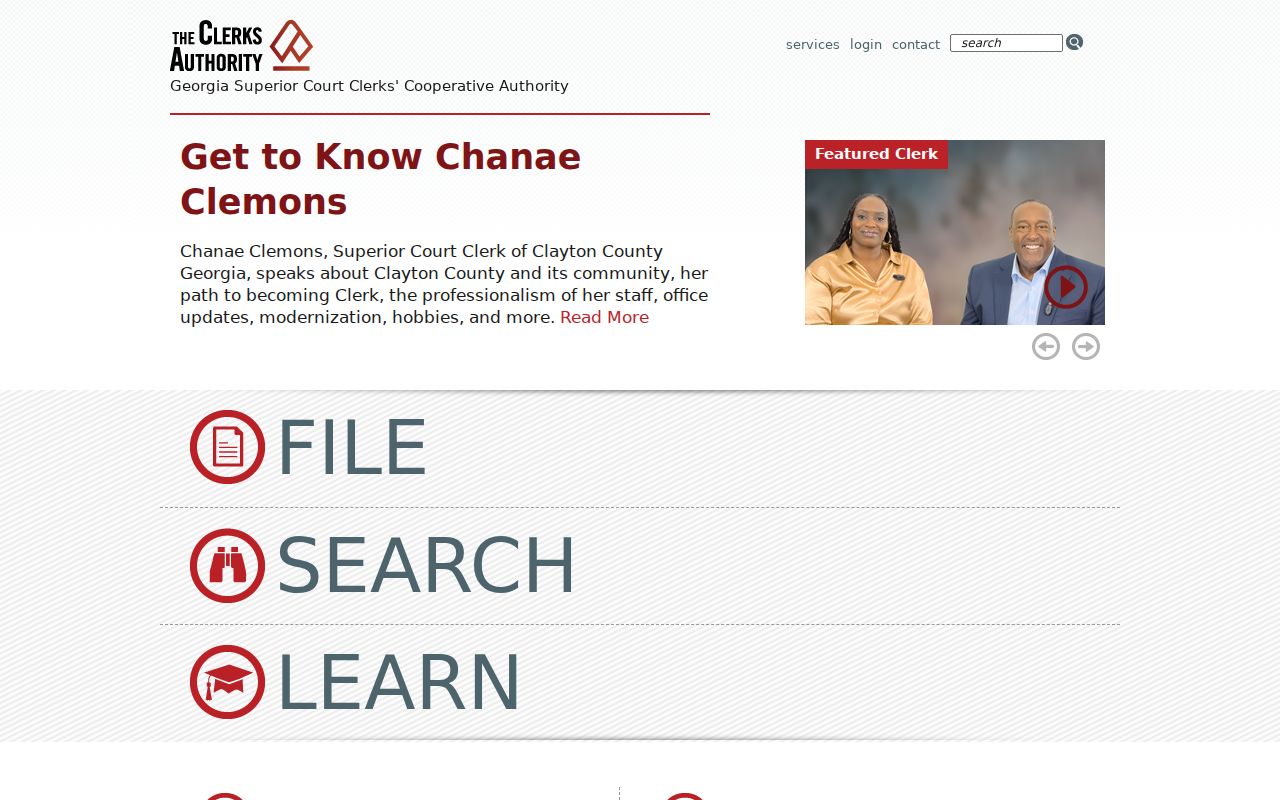
Its statewide role helps locate clerk services, while Lamar's clerk remains the source for verifying local criminal pleadings and final orders.
The Georgia clerk authority home page also illustrates why court and executive-branch criminal histories must be compared.
GCIC receives criminal-justice reporting, while a clerk's certified disposition documents what the court entered in a specific Lamar County case.
GCIC Connects Lamar Arrest Cycles
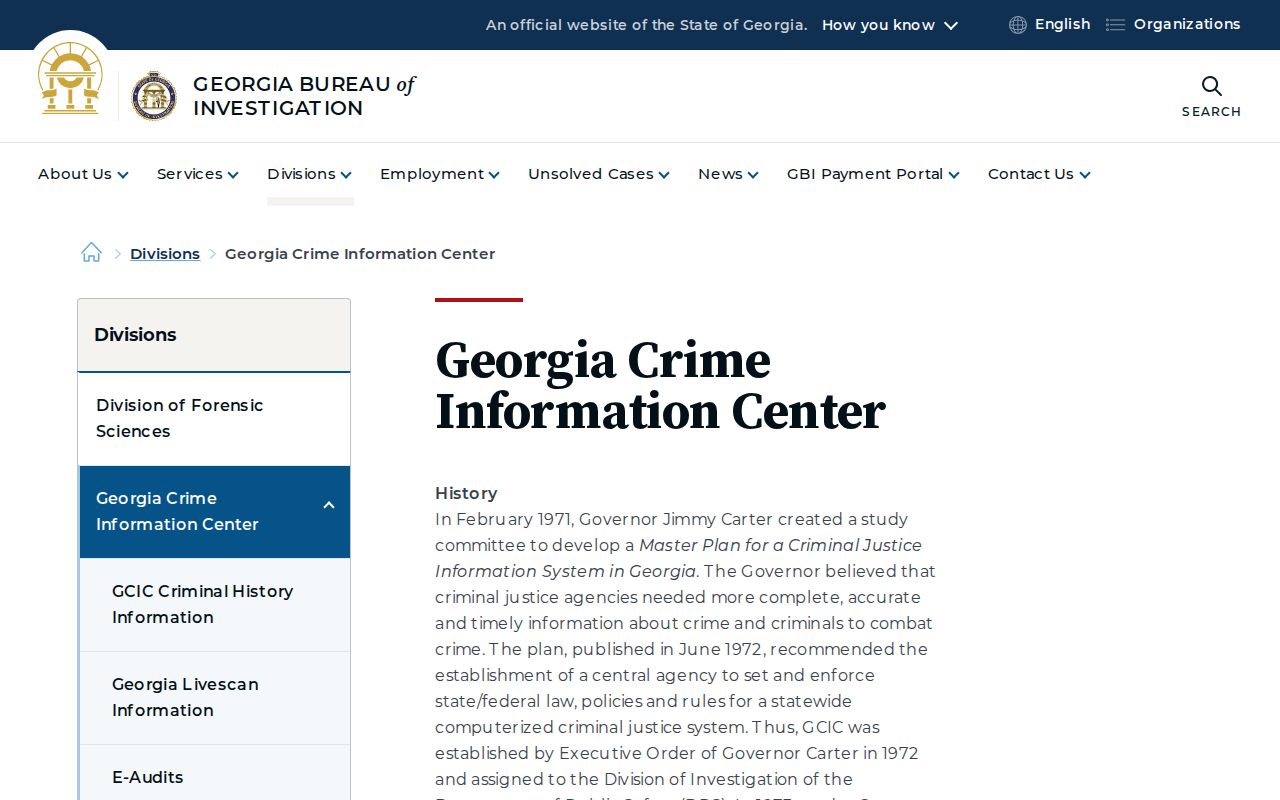
GCIC operates the state criminal-history repository and related systems. Arresting agencies send fingerprint-supported cycles, and courts, prosecutors, and custodial agencies report later outcomes. Timing gaps can leave an arrest looking unresolved even after a Lamar court has acted. That is why a state history should be checked against the clerk's final order.
The official GCIC overview appears in the captured source below.

The state system connects reported events, but each Lamar County source agency remains responsible for its own underlying record and corrections.
- Arrest cycle
- The linked arrest, fingerprint, charge, and later disposition data sent to GCIC.
- Disposition
- The final court result for a filed count.
- Certified copy
- A clerk-authenticated court document used to prove the official filing or outcome.
- Record restriction
- A Georgia limit on eligible noncriminal-justice dissemination, not universal erasure.
City-by-City Criminal Records in Lamar County
Barnesville, Milner, and Aldora share county and state systems, but the arresting agency may hold the first narrative. A city location does not prove which agency responded. Start with the report or citation number, then use the sheriff for a Lamar booking and the Superior Court clerk for a filed felony. No verified public municipal lookup was located for these cities, so each city route emphasizes official county fallbacks rather than unofficial directories.
Barnesville Record Check
The county seat and main justice hub; follow city reports, county booking, and clerk filings separately.
Milner Record Check
Identify the arresting agency first, then use Lamar jail and court channels as needed.
Aldora Record Check
Use event details and the issuing agency or court because no standalone portal was verified.