
Criminal Court Cases in Lamar County
Lamar County Superior Court is the felony trial court. Its clerk keeps the formal case file at 326 Thomaston Street in Barnesville. State Court handles misdemeanors and traffic matters within its jurisdiction. Magistrate Court, at the Roberta Drive campus, issues arrest and search warrants and conducts early functions. Municipal courts retain qualifying ordinance, traffic, and misdemeanor matters.
A court case begins only when a prosecutor files an accusation, indictment, or other charging paper. That filing may differ from the charge listed at booking. Ask the clerk which court owns the matter before searching. A name, date of birth when lawfully available, filing year, and case number help separate people with similar names. The clerk can also explain whether an older file is indexed online, held on site, or must be retrieved.
Lamar Courts Split the Case Work
One event can create records in several Lamar County offices. Magistrate Court may issue a warrant. The jail may record intake. A prosecutor decides which count to pursue. Superior Court receives a felony filing and keeps the docket through disposition and sentence. A municipal or State Court case may never become a Superior Court file.
| Office | Typical court record | Official channel |
|---|---|---|
| Superior Court Clerk | Felony docket, indictment, orders, disposition, sentence | Lamar clerk page |
| Magistrate Court | Arrest/search warrants and early proceedings | Magistrate Court page |
| State or municipal court | Jurisdictional misdemeanor, traffic, or ordinance case | Confirm with the named court |
| GSCCCA | Statewide clerk gateway with product-dependent coverage | GSCCCA |
A “no record” answer from one court may be correct even when another court holds the matter. Ask where the case was transferred or filed.
Lamar County Case Record Searches
No official source promises one complete free statewide criminal-case database. Lamar's clerk directs users to the Georgia Superior Court Clerks' Cooperative Authority, yet local verification remains essential. Start with the case number. When it is unknown, provide the full name, spelling variants, approximate filing year, and date of birth if disclosure and use are lawful.
- Identify whether the matter is a felony, warrant-stage case, misdemeanor, traffic case, or municipal charge.
- Search the relevant clerk channel by case number or party name.
- Compare the court, filing year, and identifying facts before selecting a result.
- Open or request the docket, then locate the charging paper and final disposition.
- Order a certified copy from the Lamar clerk when proof of the official result is needed.
Because GSCCCA access and product coverage can vary, its visible controls should be treated as gateway fields, not a guarantee that every Lamar criminal image is online.
| Field | Type | Required | Use |
|---|---|---|---|
| Case number | Text | No | Strongest way to identify one Lamar filing. |
| Last and first name | Text | Search-dependent | Use spelling variants and verify the person. |
| Filing year | Date/year | No | Narrows a common-name result. |
| Court or case type | Selection | No | Separates felony from other court levels. |
| Date of birth | Date | Availability varies | Use only when lawfully available. |
Case Numbers Control Lamar Name Errors
A party-name search can return the wrong person or miss a file because of spelling, aliases, initials, or data-entry differences. The case number ties the docket to a specific court and filing. It is often printed on a citation, bond paper, hearing notice, court receipt, or prior order. If only an incident number is available, ask the arresting agency or clerk whether it maps to a later court case.
For older Lamar County cases, do not equate a weak gateway result with an absent file. Call the Superior Court clerk at 770-358-5145 and describe the court level, name, approximate date, and known charge. Ask whether the index, paper file, or archived record must be checked. Certified documents should come from the court that entered them, not from a commercial name-search service.
Note: A case number is more reliable than a name, but still verify the court and defendant before relying on a docket.
What a Criminal Case File Contains
The docket is the table of contents for a Lamar County criminal case. It lists filings and court events in date order. The charging document shows the counts the prosecutor actually filed. Motions and orders show disputed issues and rulings. The judgment or disposition records what happened to each count, while the sentence states custody, supervision, fines, or conditions.
| Case Number & Court | The local identifier, court division, and filing year. |
|---|---|
| Charging Document | The accusation or indictment and the statutes alleged by the prosecutor. |
| Docket Entries | A dated index of pleadings, notices, hearings, and orders. |
| Hearing Dates | Scheduled and completed proceedings, subject to later changes. |
| Disposition & Judgment | The outcome for each filed count, such as conviction, dismissal, or acquittal. |
| Sentence & Conditions | Custody, probation, financial terms, and other court-ordered conditions. |
A booking sheet cannot replace this court file. Initial jail charges may be amended, declined, or replaced before filing. The final disposition is the key document when correcting a state history that still shows an unresolved arrest.
Lamar Dispositions Are Not Interchangeable
Small wording differences can change the meaning of a criminal docket. A dismissal ends a count by court action. An acquittal follows a not-guilty determination. “Nolle prosequi” records the prosecutor's decision not to pursue a count at that time. A plea states the defendant's formal response, while a sentence follows a conviction or other qualifying adjudication.
- Arraignment
- The stage when the filed charge is presented and a plea is entered.
- Nolle prosequi
- A prosecutor's formal decision not to continue a charge at that time.
- Disposition
- The recorded outcome of a filed count.
- Certified disposition
- A clerk-authenticated copy used to prove the court's official result.
- Docket
- The chronological index of filings and court events.
Read outcomes count by count. One indictment can contain several charges with different results. A case-level label may hide that distinction.
Criminal Case Stages in Lamar County
The record changes as a case moves. A warrant or arrest may precede any prosecutor filing. Booking staff record the initial allegation. The Towaliga Judicial Circuit prosecutor then decides what charge to present. Arraignment addresses the filed count, while pretrial entries document motions, discovery disputes, scheduling, and plea talks. A plea or trial produces the disposition, followed by sentencing when applicable.
Case flow: Charges Filed › Arraignment › Pretrial › Plea or Trial › Disposition › Sentencing
The clerk's docket is the best timeline for these filed events. Jail release is a custody event, not a court result. Likewise, a later GDC transfer is a corrections event after the relevant sentencing order. Keep those systems separate when reconstructing what occurred.
Towaliga Filing Follows Investigation
An official 2025 GBI release shows the local handoff without requiring private-party details. The Lamar sheriff requested GBI assistance with an investigation. The release then described an arrest and booking at the Lamar jail and said the completed investigative file would go to the Towaliga Judicial Circuit District Attorney. That sequence demonstrates why a same-day booking charge is not the final court charge.
The GBI services index provides context for the agency's statewide role.
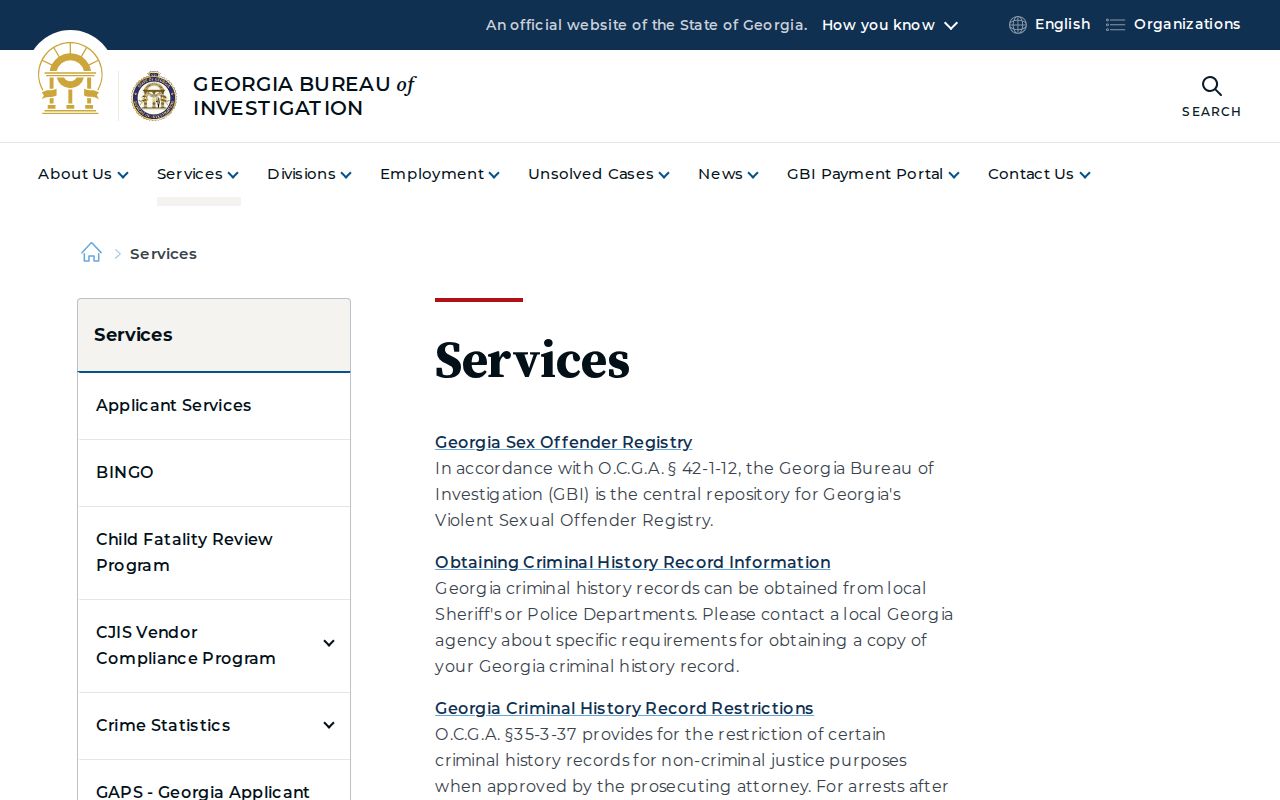
The image supports the agency handoff, while the Lamar clerk remains the custodian once a felony charge is filed in Superior Court.
When researching a case timeline, request the investigative report from its agency, the booking record from the jail, and the filed court record from the clerk. None substitutes for the others.
Certified Lamar Dispositions Correct GCIC
Georgia criminal-history reporting joins an arrest cycle with later court outcomes. If a disposition is missing or delayed, the GCIC history may make the arrest appear unresolved. The practical response is to secure a certified disposition from the Lamar court that decided the case. Compare its case number, charge, and outcome with the reported state entry.
The GBI criminal-history guidance explains inspection and correction routes. Depending on the problem, the arresting agency, prosecutor, clerk, or GCIC may need the certified order. A court dismissal does not by itself prove that every separate system has updated. Likewise, Georgia record restriction under O.C.G.A. §35-3-37 limits eligible dissemination but does not automatically erase all source documents.
Best evidence: Ask for the docket and a certified final disposition, not merely a screen print of a name-search result.
Access Rules for Case Records
Adult court files are generally subject to public access, but the Georgia Open Records Act and court rules allow lawful redaction or withholding. Juvenile files do not follow the same open-access rule as adult cases. Protected victim details, sealed material, security information, and some identifiers may be absent from a public copy. An online view may also expose fewer fields than the clerk's official file.
If a Lamar County case does not appear, contact the proper clerk rather than concluding that it never existed. Ask whether the matter is in another court, is older than the online index, uses a different spelling, remains under seal, or was never filed by the prosecutor. A request for segregable nonexempt portions can help when only part of a record is protected.
Under Georgia open-government guidance, the custodian should identify the legal basis for withheld public material. Court certification and copy fees must be confirmed with the clerk. The county's general ten-cent copy notice should not be assumed to set every court-document charge.